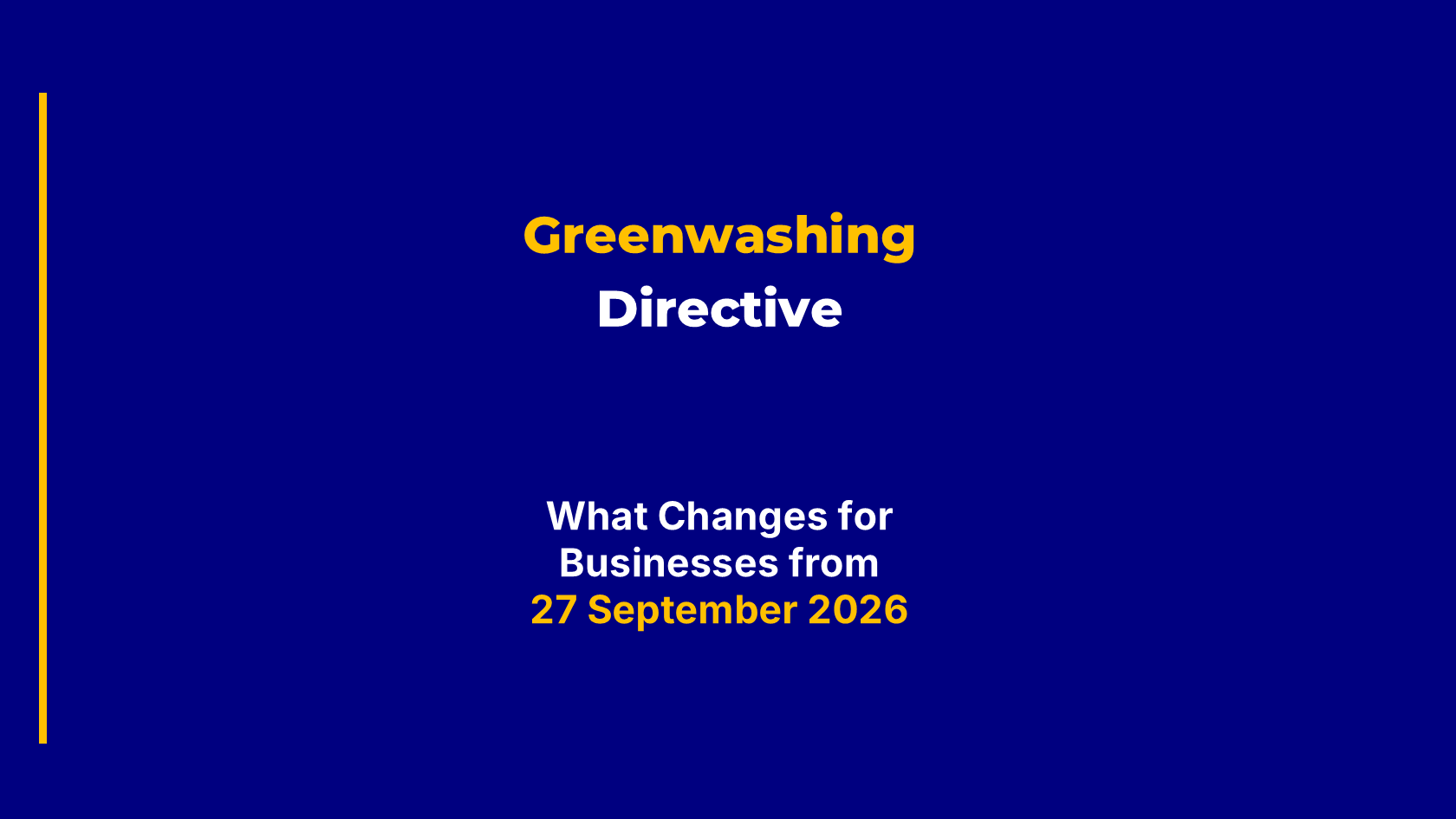
Terms such as ‘green’, ‘eco-friendly’ and ‘zero-impact’ have long been part of corporate communications. From 27 September 2026, however, everything will change. The EU Directive (known as EmpCo) imposes a radical change in the way businesses promote their sustainability, with the aim of protecting consumers from generic or misleading messages.
What impact will this have on businesses?
How can legal advisers and insurance brokers assist their clients?
The prohibitions introduced by the EU Directive
The Directive introduces a ‘blacklist’ of commercial practices deemed (in all cases) to be unfair, expressly including greenwashing.
In the absence of scientific evidence, clear explanations based on reliable evidence or independent certification schemes, it will no longer be possible to use generic environmental claims (e.g. terms such as ‘eco-friendly’, ‘biodegradable’) or sustainability labels. Similarly, it will not be possible to claim climate neutrality (e.g. ‘zero impact’) if the result stems solely from offsetting greenhouse gas emissions.
The Impact on Businesses
Legal Context: regulatory compliance or sanctions?
It will now be much easier to establish cases of greenwashing, given the ‘watertight’ regulatory framework, which includes the new blacklist of absolute prohibitions and eliminates the need for case-by-case assessments.
The consequences for businesses that fail to comply will be extremely costly in financial terms: depending on the country, fines can reach up to 10 million euros or 4 per cent of annual turnover for the most serious breaches (Italy), or 10 per cent of annual turnover in certain cases of fraud (France), or 50,000 euros for each individual breach plus the mandatory restitution of all profits generated through greenwashing (Germany).
The authorities may also impose injunctions (immediate withdrawal of products from the market) and require the publication of the ruling in newspapers or on websites, thereby causing the company reputational damage that often exceeds the value of the financial penalty.
By 27 September 2026, companies must therefore:
– put in place appropriate tools and internal procedures to document – with verifiable data and evidence – the accuracy of every environmental claim;
– update commercial communications (including digital communications), labels and promotional materials.
Insurance Scope: Insurance cover or exclusion?
In general, D&O policies do not automatically or explicitly exclude greenwashing. However, cover is by no means guaranteed, due to the inclusion of standard exclusion clauses relating to:
– wilful misconduct and intentional conduct (where established, by a final judgement, that managers have disseminated misleading or fraudulent communications whilst knowing that the environmental data was false);
– pollution (although the legal debate on this is now largely settled, some insurers still use this exclusion to deny cover);
– Personal and Advertising Injury (damages relating to misleading advertising and marketing breaches).
In recent years, insurers have taken divergent approaches, introducing the following into insurance contracts:
i) explicit exclusion clauses for greenwashing or breaches of specific environmental regulations, to limit their own exposure or, conversely,
ii) policy extensions to cover ‘crisis management’ costs arising from reputational damage linked to ESG issues.
Checklist for legal advisers and brokers:
- Does your corporate clients’ D&O insurance policy include standard and specific exclusions relating to greenwashing?
- Do the internal tools and processes adopted by your corporate clients comply with the new provisions?
- Do your corporate clients’ commercial communications (including digital communications), labelling and promotional materials comply with the new regulations?